


Authentic HiPP Dutch: How to Tell the Real NL Can from the Belgium Version

Table of Contents
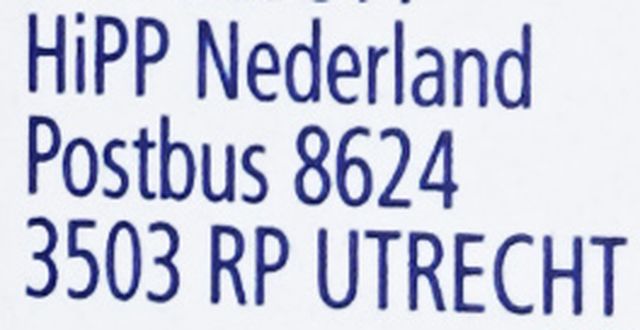
Turn the can around and look for two things. The real HiPP Dutch carries the article number NL2472-03 for Stage 1, and the address on the label should read HiPP Nederland, Postbus 8624, 3503 RP Utrecht. A BE number, BE2472-03, is the Belgian version. It is not fake or unsafe; both are made following the same EU rules, but it is simply not the NL version. What differs is the journey, sometimes the scoop and feeding chart, and which national authority stands behind the pack. Belgian cans sit further down the chain, with more handling and more waiting, so they more often arrive with less shelf life left. These differences look small, but together they matter more than you would think. In short: If you are able to order the NL version, always order the NL version!
HiPP Dutch is the formula parents reach for most often in our store. But most parents never hear or realize the following: there are two different versions on the market, the Dutch one and a Belgian one that looks almost identical on the shelf.
This guide will explain how to see the difference between these two, and why it matters.
Key takeaways
- One check settles it. Stage 1 should read article number NL2472-03 with a Utrecht address. All stages of HiPP Dutch have an article number starting with NL. That is the real Dutch can.
- BE is the Belgian version. The Belgian version has BE at the start of its article number. It is made by HiPP, under the same EU laws, so it is not fake or unsafe. It simply travels further down the chain, so it more often arrives with less shelf life left and more transit time.
- The letters matter; the digits do not. NL and BE cans share the same family number. Only the prefix, NL against BE, tells you the market.
- Sold in the Netherlands, under Dutch supervision. A Dutch-market can is for sale in the Netherlands under the supervision of the NVWA, the Netherlands Food and Consumer Product Safety Authority. The Belgium-market version is not.
- Mix from the can, not the website. A feeding chart is written for the scoop size inside that can. Retailers selling a BE can sometimes show the feeding chart of the Dutch version instead. The scoop sizes differ, so always double-check the chart if you have a BE version.
- Ask before you order. Ask your retailer to confirm the article number on the stock they are shipping.
What is in HiPP Dutch, and why parents choose it
Before the NL and BE question, it helps to know what is in the can. HiPP Dutch is a certified organic formula made to Regulation (EU) 2016/127, the European infant formula law that sets minimum and maximum levels for every nutrient that matters, including a DHA requirement the U.S. FDA does not impose. U.S. formulas can be perfectly adequate, but EU-made formulas meet a measurably higher standard.
Three things set the Dutch range apart from most organic formulas on the shelf. It carries DHA from fish oil at a level comfortably inside the EU band. It includes a GOS prebiotic, the galacto-oligosaccharides that feed the gut bacteria a breastfed baby grows naturally. And Stage 1 adds probiotics, a live culture, Lactobacillus fermentum CECT5716, originally isolated from breast milk. Among the brands we stock, it is the only one that pairs a prebiotic with a live culture probiotic, which our guide to formulas with prebiotics and probiotics goes into. Our guide to which ingredients make a premium European baby formula explains what each of those actually does.
The four stages, and what each one is for
European formula is stage-based rather than one can for the whole first year, because a newborn and a fifteen-month-old need different nutrition. The article numbers below are the current Dutch-market ones, taken from HiPP's own Netherlands product pages, with the Belgian equivalent alongside so you can see the difference at a glance.
| Stage | Suitable from | What this stage is for | Dutch can (NL) | Belgian can (BE) | Shop |
|---|---|---|---|---|---|
| Stage 1 | From birth | Whey-dominant protein, closest to the early breast-milk balance. DHA, GOS prebiotic, and the live L. fermentum culture | NL2472-03 | BE2472-03 | Stage 1 |
| Stage 2 | From about 6 months | Follow-on milk for a baby who has started solids. EU rules set a higher iron range for follow-on formula than for Stage 1 | NL2476-03 | BE2476-03 | Stage 2 |
| Stage 3 | From about 10 months | The milk part of the day for a baby now eating a varied diet, rather than the main source of nutrition. | NL2482-03 | BE2482-02 | Stage 3 |
| Stage 4, sold as Junior | From about 12 months | Toddler milk, doing the same job as Stage 3 for an older child alongside family food | NL2483-04 | Not published by HiPP Belgium at the time of writing | Stage 4 |
Swipe sideways to see the whole table.
Here is what each of those article codes looks like on the Dutch cans themselves. The article number has three parts. The letters are the market the can was made for, the four digits are the stage-specific numbers, and the two digits after the dash are the revision, which changes when HiPP updates a recipe or a label. Read the letters first. They are the only part that tells you the country.
The four Dutch-market article numbers
Photographed on the cans. In every case, the letters NL come first.
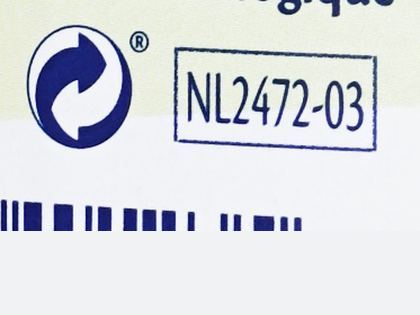
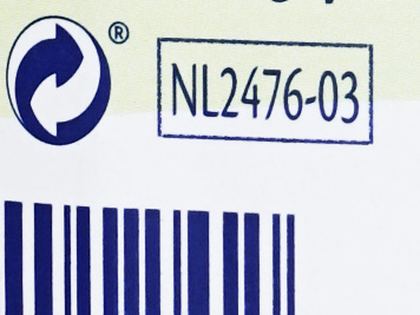
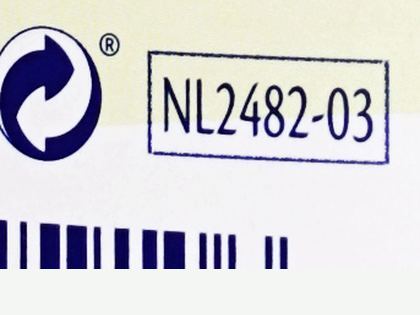
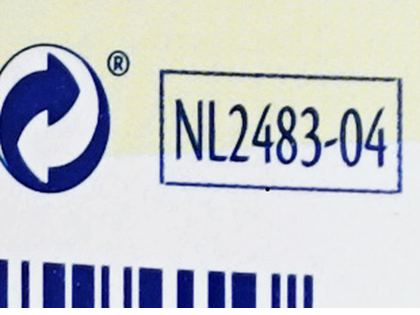
All four Dutch cans carry the same address, HiPP Nederland, Postbus 8624, 3503 RP Utrecht. So the check is the same at every stage: an article number starting with NL, and the Utrecht address listed. Our HiPP stage-by-age guide goes further into when to move up, and our overview of the stages used in European baby formula explains why the age-specific stages exist.
Sold in the Netherlands, under Dutch supervision
A HiPP Dutch can is a product placed on the Dutch market. It is sold in the Netherlands under the supervision of the NVWA, the Nederlandse Voedsel- en Warenautoriteit, or Netherlands Food and Consumer Product Safety Authority. The Belgium-market version is not. That is what the HiPP Nederland Utrecht address and the Dutch service number on the label represent.
It helps to know who does what. EFSA, the European Food Safety Authority, is the scientific body of the European Union. It assesses what is safe and suitable in infant formula, and the European Commission turns that advice into law, in this case Regulation (EU) 2016/127. EFSA advises. It does not inspect a factory or pull a product from a shelf. Its work on foods for infants and other groups is published openly. The NVWA is the regulator that does the inspecting. In its own words, it supervises baby food and other special nutrition sold or produced in the Netherlands, and if a product does not meet the requirements, it steps in, for example by banning the sale.
And the NVWA is strict. Rice protein is the clearest example. It has never been approved in the European Union as a protein source for infant formula, and the NVWA states on its own site that infant formula based on rice protein may not be sold in the Netherlands, for the simple reason that EFSA has not assessed whether rice is suitable as a protein source. Not "we found a problem, so we banned it", but "it has not been assessed, so it is not allowed here". That is the Dutch instinct in one line, and it is the oversight a Dutch market can sit under.
There is a second difference you can see. Both cans name the manufacturer, HiPP GmbH and Co. Vertrieb KG, D-85273 Pfaffenhofen, because that is where HiPP is based. The Belgian can carries that German address on its own. The Dutch can adds two things underneath it: the HiPP Nederland Utrecht address, and a Dutch customer service number, HiPP Klantenservice (NL) 088-5437 447. A Belgian can has no Dutch service line.
The two Dutch-only lines on the label
Both sit on the side panel, under the German manufacturer address.

One thing that catches people out, and we are sorry about it. A genuine Dutch can may also print hipp.be somewhere on the label. HiPP serves the Benelux as one region, so the Belgian web address turns up on Dutch packaging. Seeing hipp.be does not mean you are holding the Belgian version. It is confusing, and we understand why it worries people. The article number is what decides: if it starts with NL, you have the Dutch can, whatever web address is printed elsewhere on the pack.
So, pick up your can: check the article number, and check the address on the side panel. If the can shows a BE article number or an address in Belgium, you have the Belgium-market can.
So is a BE can a problem?
No, and it is worth being direct about this, because much of what is written on the subject is scaremongering. HiPP makes a BE can under the same EU infant formula law that governs composition, contaminants, and labeling across the union. It is not counterfeit and not a lesser recipe. That shared rulebook is why EU-made formula is held in such regard, as our comparison of new U.S. formulas against EU gold-standard brands sets out.
The two differ in their journey. The Dutch cans sit closer to the source, and the Belgian ones tend to pass through more steps on the way, more handling, more waiting in between. That changes nothing inside the pack, but a longer route makes it more likely a batch arrives with less shelf life left and has gone through longer transit times.
Shelf life is worth pausing on. A can that lands with eight months on it is fresher than one with three, and fresher is always the better can to open for a little one. It also changes how the can feels to own: with months in hand, you open it when your baby is ready, not when the date says so.
The other one is the scoop. The feeding chart on a can is written for the scoop inside it, and the two markets do not always match. Some shops list the Dutch scoop and chart on their website information page but then ship a Belgian can. This can cause a parent to mix to the wrong concentration, making the formula too thick or too thin. The rule of thumb: when you receive a Belgian can, use the scoop that came in the can, and follow the feeding chart on that can.
Each of these differences looks small on its own. Together they add up to more than you would think. A BE can does not have to be a bad choice. It just is not the Dutch one.
How to make sure the can you order is the Dutch one
Most shops that specialize in European formula state the market version on the product page. If it is not stated, ask. One line before you order is enough: "Is this the Dutch-market HiPP, with an article number starting NL and the HiPP Nederland Utrecht address on the label?" A retailer buying through the authorized European chain can answer that in a sentence and can confirm the NL article number and address on the can. A retailer who cannot does not know precisely what is on their own shelf.
For our part, this is the standard we hold ourselves to. What we sell as HiPP Dutch is the Dutch-market version: NL2472-03, NL2476-03, NL2482-03 and NL2483-04, each carrying the Utrecht address.
Which HiPP should you actually buy?
- From birth: HiPP Stage 1, then move up by age. Browse the wider newborn range for birth to 6 months if you want to compare brands first.
- Sensitive digestion or a family history of allergy: HiPP hypoallergenic or HiPP Comfort, best started on pediatrician advice.
- A gentler protein without going hypoallergenic: HiPP goat, explained in our guide to the benefits of organic goat milk formula.
- Still comparing brands: the cornerstone European organic baby formula buyer's guide covers all three brands we stock.
Frequently asked questions
How do I know my HiPP Dutch formula is the actual Dutch version?
Look for the article number starting with NL, printed in a small box beside the circular recycling mark just above the barcode. Then check the address block, which should read HiPP Nederland, Postbus 8624, 3503 RP Utrecht on the side panel. If you find both, it is the official Dutch-market version.
My Dutch can says hipp.be. Did I get the Belgian version?
No. HiPP serves the Benelux as one region so a Belgian web address can appear on Dutch packaging. It is genuinely confusing, and we are sorry it works that way. The article number is what decides. If it starts with NL, you have the Dutch can.
Is a BE article number a sign of a fake can?
No. BE simply means HiPP produced the can for the Belgian market under the same EU infant formula law. The practical differences are the labeling, sometimes the scoop, the supply route, and which national authority stands behind the pack. Where you have the choice, the Dutch version is the better pick.
What is the NVWA, and why does it matter here?
The NVWA is the Nederlandse Voedsel- en Warenautoriteit, the Netherlands Food and Consumer Product Safety Authority. It supervises baby food sold or produced in the Netherlands and can ban a product outright. A HiPP Dutch can is sold in the Netherlands under its supervision. The Belgium-market version is not. The NVWA is strict about what it allows: it states that rice-protein infant formula may not be sold in the Netherlands because EFSA has not assessed rice as a protein source.
Why do Dutch and Belgian cans share the same number?
Because the digits identify the product stage, not the country. HiPP Stage 2 is 2476-03 in both markets, so the Dutch can reads NL2476-03 and the Belgian can reads BE2476-03. Only the first two letters tell you the market.
Which stage does my baby need?
Stage 1 from birth, Stage 2 from about 6 months, Stage 3 from about 10 months, and Stage 4 Junior from about 12 months.
Glossary of key terms
Article number: The short product code printed on a HiPP can, such as NL2472-03. The letters indicate the market, the digits indicate the product stage, and the digits after the dash indicate the revision.
EFSA: The European Food Safety Authority, the EU's scientific advisory body on food. It assesses what is safe and suitable, and the European Commission turns that advice into law.
NVWA: The Nederlandse Voedsel- en Warenautoriteit, or the Netherlands Food and Consumer Product Safety Authority. The Dutch regulator that supervises and enforces the rules for infant formula sold in the Netherlands.
DHA: An omega-3 fatty acid found in breast milk and required in every EU infant formula. HiPP Dutch uses organic fish oil as its source.
GOS prebiotic: Galacto-oligosaccharides, a fiber that is not digested but feeds the gut bacteria a breastfed baby grows naturally.
Lactobacillus fermentum CECT5716: A live culture originally isolated from breast milk, included in HiPP Dutch Stage 1.
Follow-on formula: The legal term for Stage 2, for babies over six months. EU rules set a different nutrient range for it than for infant formula.
The bottom line: what to check and what to buy
An article number starting with NL, the HiPP Nederland Utrecht address, and a Dutch service number. Those three lines mean a Dutch-market can, sold in the Netherlands under NVWA supervision. A BE code means the Belgium-market version, which is genuine HiPP made to the same European law, just with a longer road behind it.
- Buy the Dutch range: shop HiPP, starting with Stage 1 from birth.
- Understand the national versions: read HiPP Dutch vs German vs UK.
- Compare brands rather than versions: the cornerstone European organic baby formula buyer's guide.
If you are ever unsure what can you are holding, photograph the base of the can and send it to us. We will read the code with you.


